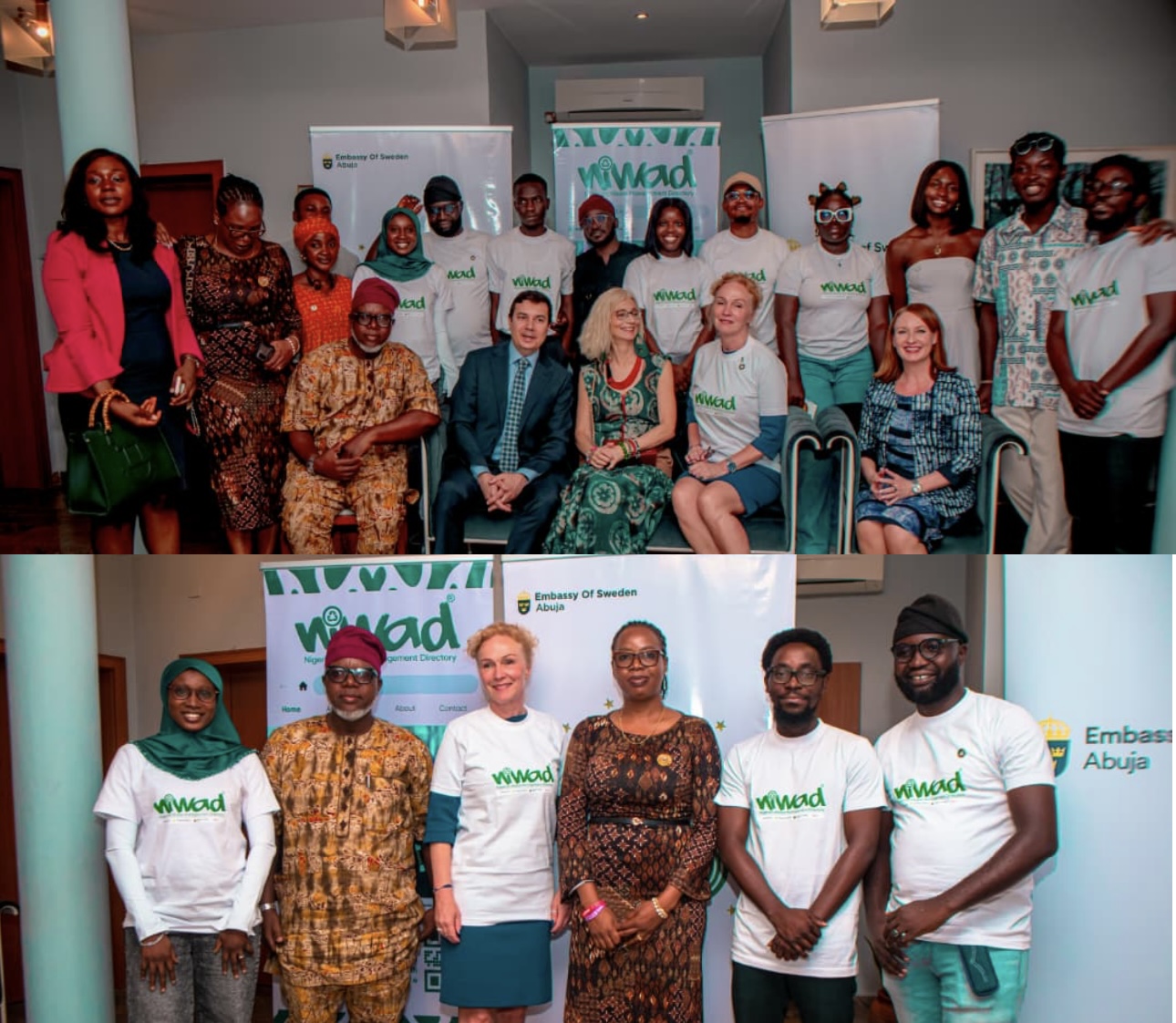
Swedish Ambassador Anna Westerholm, who hosted the launching ceremony at her residence in Abuja, fescribed NIWAD as a significant milestone in Nigeria’s development, crediting the platform as an avenue to “strengthen transparency, support better decision-making, and unlock the economic potential of circular economy.” She commended Plogging Nigeria’s leadership for what she called a Nigerian-led, youth-driven solution, and reaffirmed Sweden’s commitment to continued collaboration with the organisation.
Mayokun Iyaomolere, founder and executive director of Plogging Nigeria, traced the platform’s origins to a persistent gap the organisation identified between those who generate waste and those equipped to manage it.
The directory’s data aggregation potential, he noted, was among its most significant features, one capable of being used to “influence decisions around waste management infrastructure in Nigeria” and to “enhance stakeholder connectivity, national waste management policy, collaboration and investment opportunities.” A live demonstration of the platform, niwad.ng drew applause from the guests in attendance.
A three-person panel discussion followed, moderated by Plogging Nigeria’s NIWAD Data Validator, Taiwo Akande and featuring Daniel Oladoja (Country Lead, Global Strategic Communications Council), Atiku Abubakar Abdullahi (AD, Solid Waste Management, Abuja Environmental Protection Board Head), and Cajetan Okeke (Secretary, Recyclers Association of Nigeria). Oladoja drew a direct link between waste and climate, stating that “there is a straight line between waste management and climate solutions” and that Nigeria could “cut its emissions significantly” by managing the sector better. He added that organisations like his “solve the problem of data and information asymmetry by powering the technology that democratises knowledge for Nigerians.” Okeke, for his part, expressed hope that NIWAD would “strengthen the value chain” by centralising and making waste data accessible.
Also in attendance were the ambassadors of Norway, Brazil, and Finland, alongside foreign diplomatic staff, Plogging Nigeria executives, and representatives from sustainability and development themed organisations.
NIWAD is free and open to the public. For Plogging Nigeria, NIWAD marks one of their most ambitious undertaking yet in reshaping how Nigeria tracks, manages, and thinks about waste.
About the Author